
Eight Unusual Seeds to Start This Winter
By late November, the empty seed pots are often stacked away and attention has turned to the fireside catalogue. Yet some of the most interesting plants in the garden can begin their journey at this time of year. For certain seeds, a spell of winter cold is part of the process—a useful reminder that our eagerness for spring is not always shared by the contents of a seed packet.
Winter sowing has its own quiet pleasures. There is time to choose something unfamiliar, read a little about its origins and imagine where it might eventually belong. A few pots can hold the beginnings of a woodland corner, a summer border or even an unexpected addition to the fruit garden.
These eight plants offer rather different possibilities. Some welcome winter chilling, while others can be started under cover with a little warmth. Each has its own rhythm, and something worth looking forward to.
1. Primula vialii — a primrose with a difference
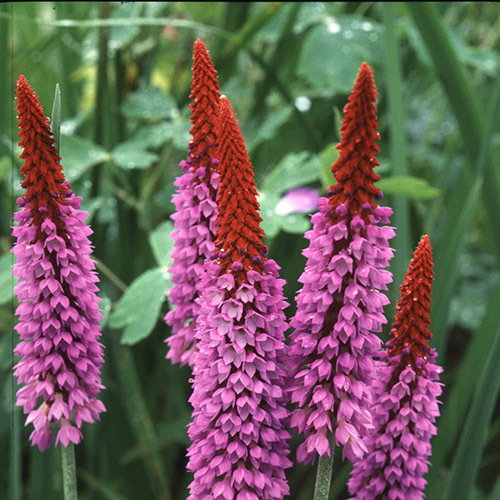
At first glance, you might scarcely recognise this as a primula. Above a rosette of crinkled green leaves rise pointed flower spikes, their scarlet buds opening from the bottom upwards into soft lilac. For a while, both colours share the same flower head, creating a combination that seems particularly adventurous for a member of the primrose family.
Primula vialii is lovely beside a pond, along a damp border or among other plants enjoying cool, moisture-retentive soil in partial shade. Its modest size makes those remarkable flowers easy to accommodate.
Sowing now: Sow thinly on the surface of moist seed compost, leaving the tiny seeds exposed to light. For a warm start under cover, around 18–20°C is suitable. Once seedlings appear, give them cool, bright conditions and steady moisture.
2. Meconopsis ‘Lingholm’ — the blue that stops you in your tracks
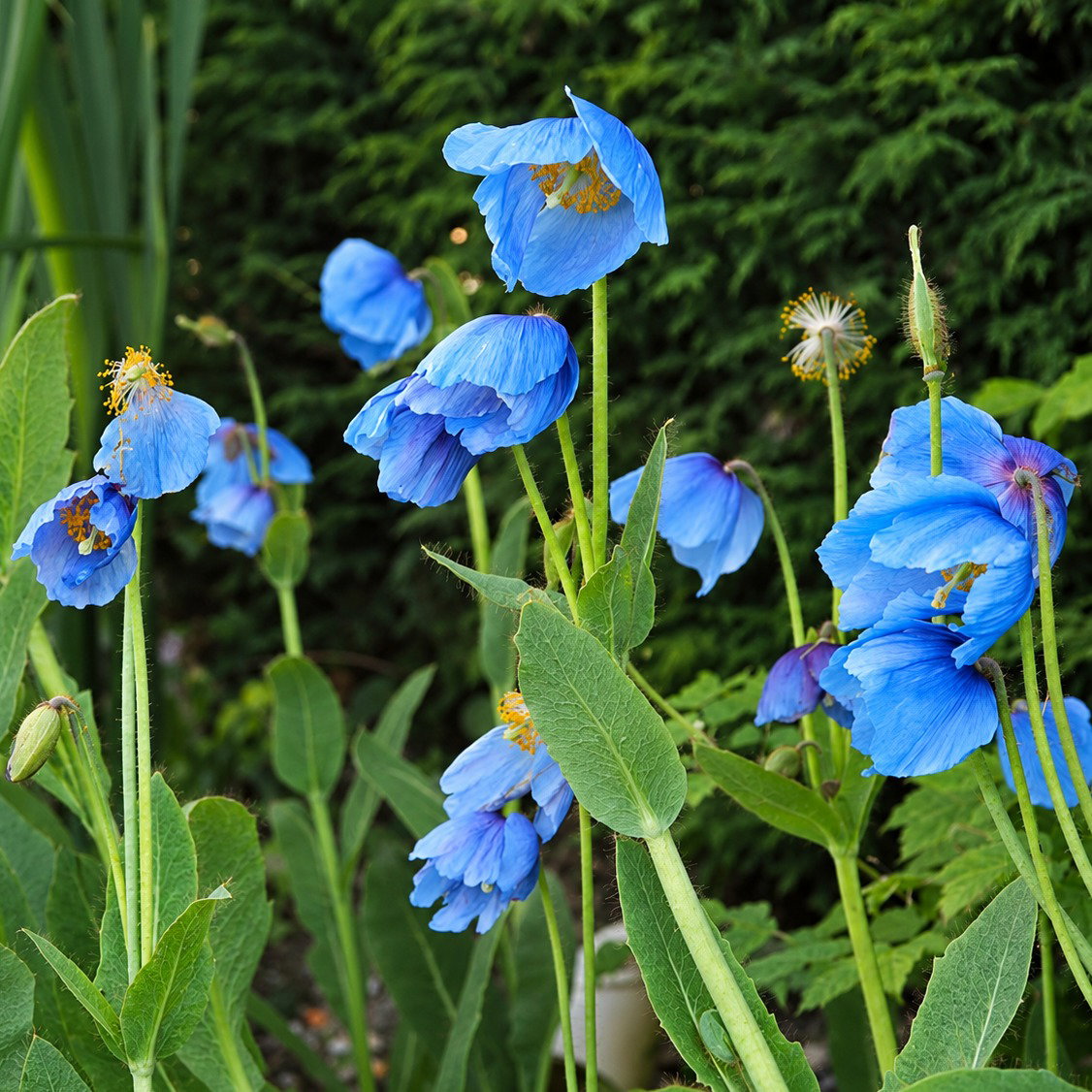
Some flowers invite a closer look. A blue poppy tends to bring the whole garden visit to a halt.
The large flowers of Meconopsis ‘Lingholm’ open in a rich, luminous blue, held above foliage clothed in golden hairs. Here in Devon, we grow them in shaded woodland beds where the soil is enriched with organic matter and kept moist.
Growing them from seed allows you to follow that transformation from its smallest beginnings. A pot of tiny seedlings gives little hint of the spectacle to come.
Sowing now: Surface-sow into finely textured, free-draining compost and keep in a sheltered cold frame through winter. The seeds need light, so keep any covering extremely fine. Maintain even moisture, then give emerging seedlings a cool, bright position sheltered from strong sun.
3. Hellebores — flowers with a little mystery
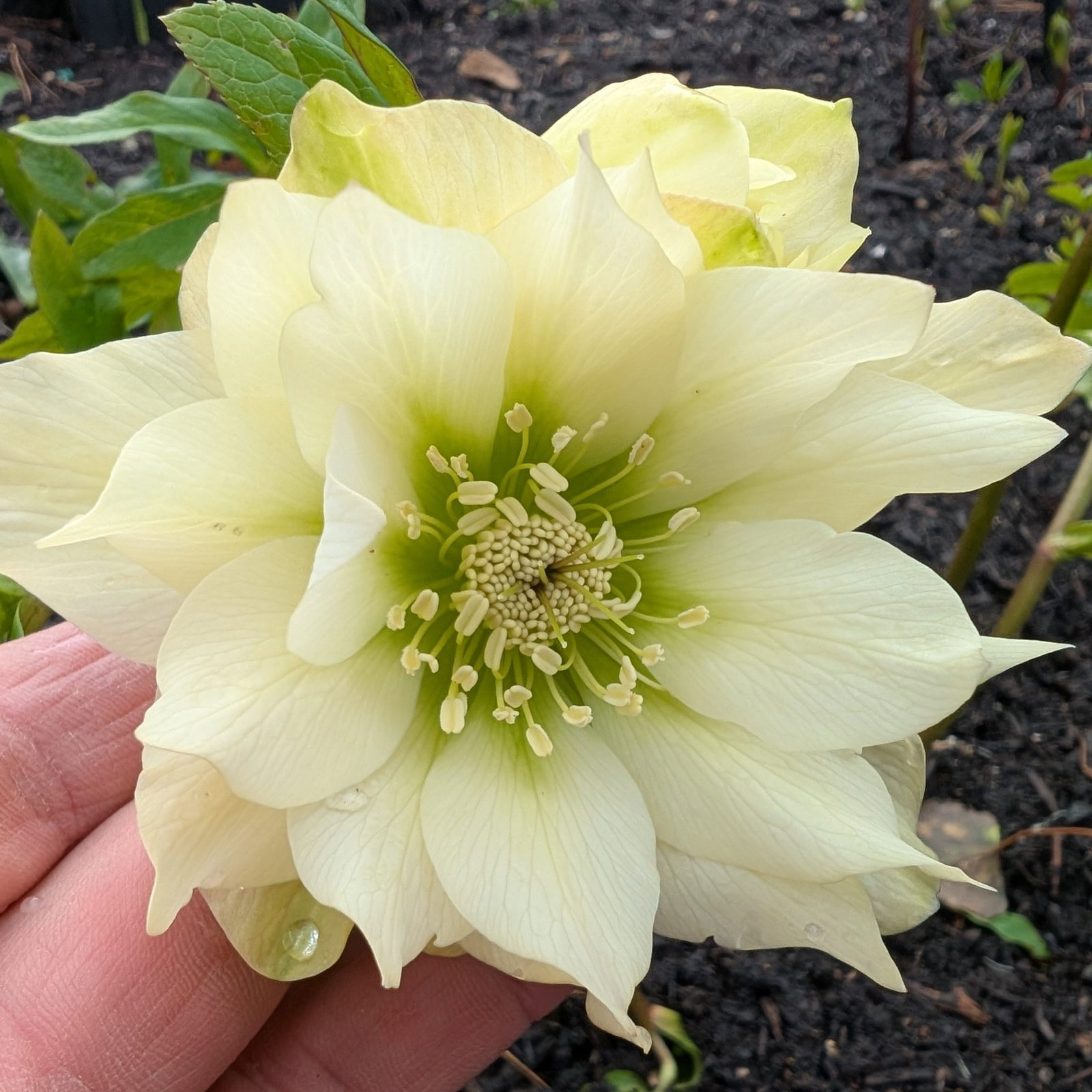
There is a particular pleasure in raising hellebores from seed: the first flowers are an introduction to plants you have grown for yourself.
Our Helleborus orientalis Plantworld Doubles offer a rich palette of whites, pinks, reds, greens and yellows, often with delicate markings and shading. Their layered flowers can have something of the appearance of small roses, opening when the garden is beginning to stir again.
They settle beautifully into a border with dappled shade and humus-rich soil, where their foliage provides a handsome setting for the flowers.
Sowing now: Stored hellebore seed benefits from a warm period followed by cold. After sowing, allow about six weeks at 15–18°C, followed by roughly six weeks of winter chilling around 5°C. Keep the compost evenly moist throughout. Seedlings can emerge over an extended period, and the developing plants will reveal their flowers over the seasons ahead.
4. Japanese wineberry — something delicious among the ornamentals
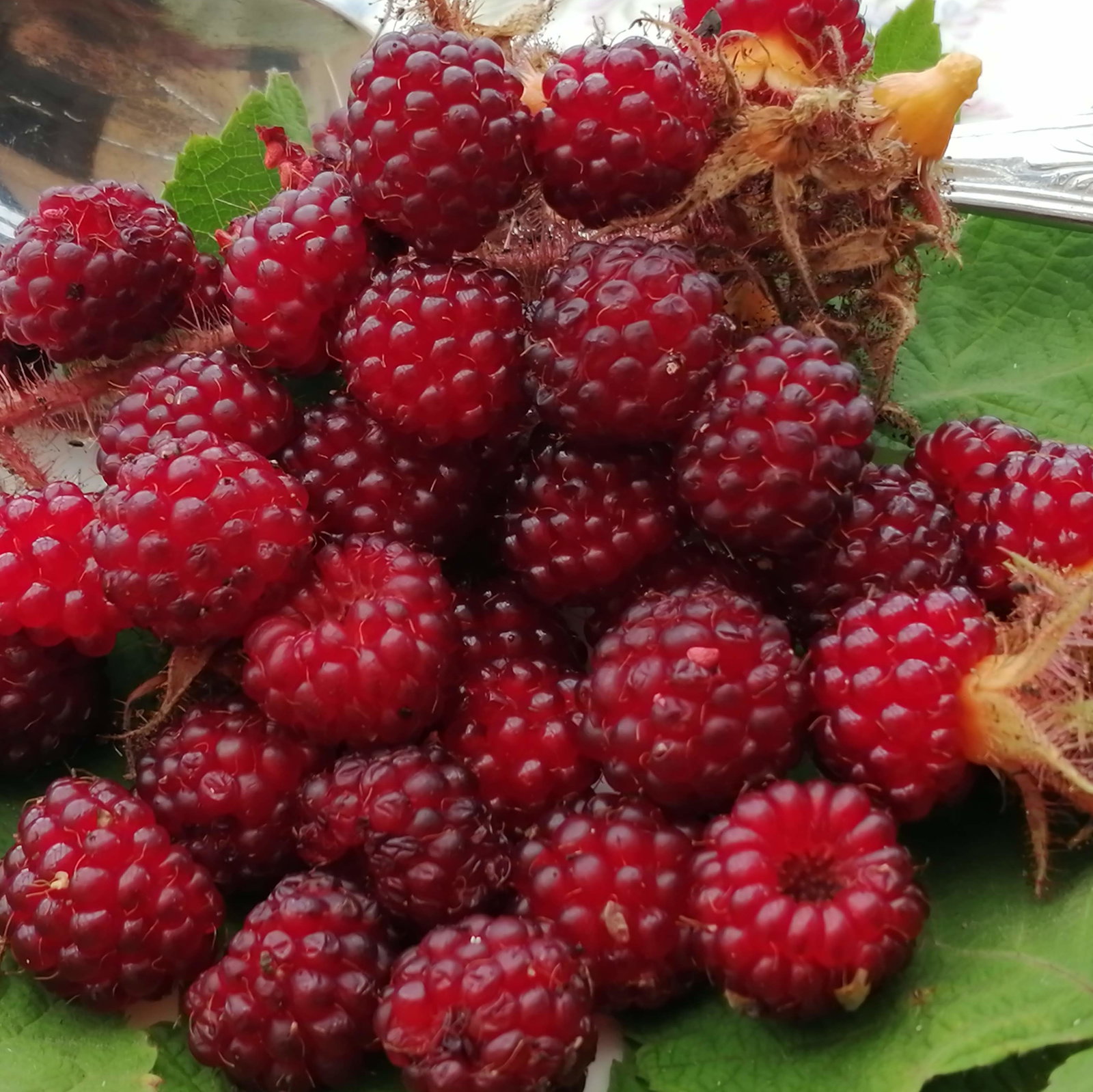
A fruiting plant can be just as ornamental as anything in the flower border, and Japanese wineberry makes a persuasive example.
Its arching canes carry clusters of berries that deepen from orange-red to crimson as they ripen. The flavour is sweet and aromatic, with a familiar suggestion of raspberry. Later, when the leaves have fallen, the reddish stems continue to bring colour to the winter garden.
Given a sunny position and support along wires or a fence, it can become a handsome and productive part of the garden.
Sowing now: Sow into pots of free-draining seed compost, cover lightly and place in a sheltered cold frame. Winter chilling helps prepare the seed for germination. Keep the pots labelled and evenly moist, allowing the seedlings to appear at their own pace.
5. Eryngium alpinum — blue lace for a sunny border
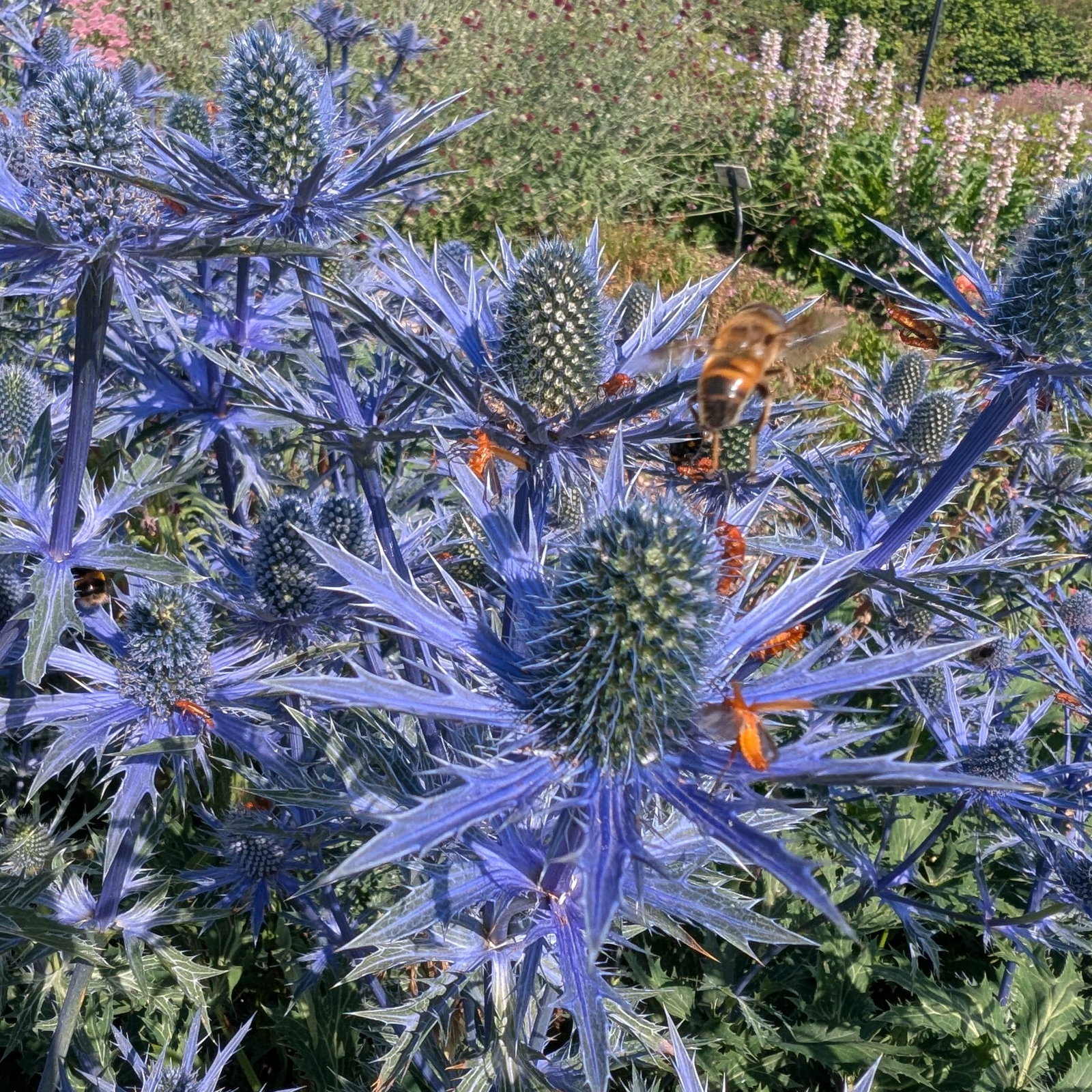
There is something wonderfully intricate about Eryngium alpinum. Each cone-shaped flower head is surrounded by a ruff of finely divided, spiny blue bracts, giving the impression of lace worked in metal.
The blue continues down the stems, while glossy green leaves form a contrasting base. Among softer flowers and grasses, those strong outlines bring structure and a different texture.
A sunny position with freely draining soil suits this alpine sea holly, allowing its distinctive form to stand out.
Sowing now: Sow into gritty seed compost and cover lightly. Give the pots an initial warm spell, followed by a period of winter chilling, following the timings on the packet. A sheltered cold frame provides a useful place for the cold stage while protecting the pots from heavy rain.
6. Gentiana acaulis — a small plant with extraordinary flowers
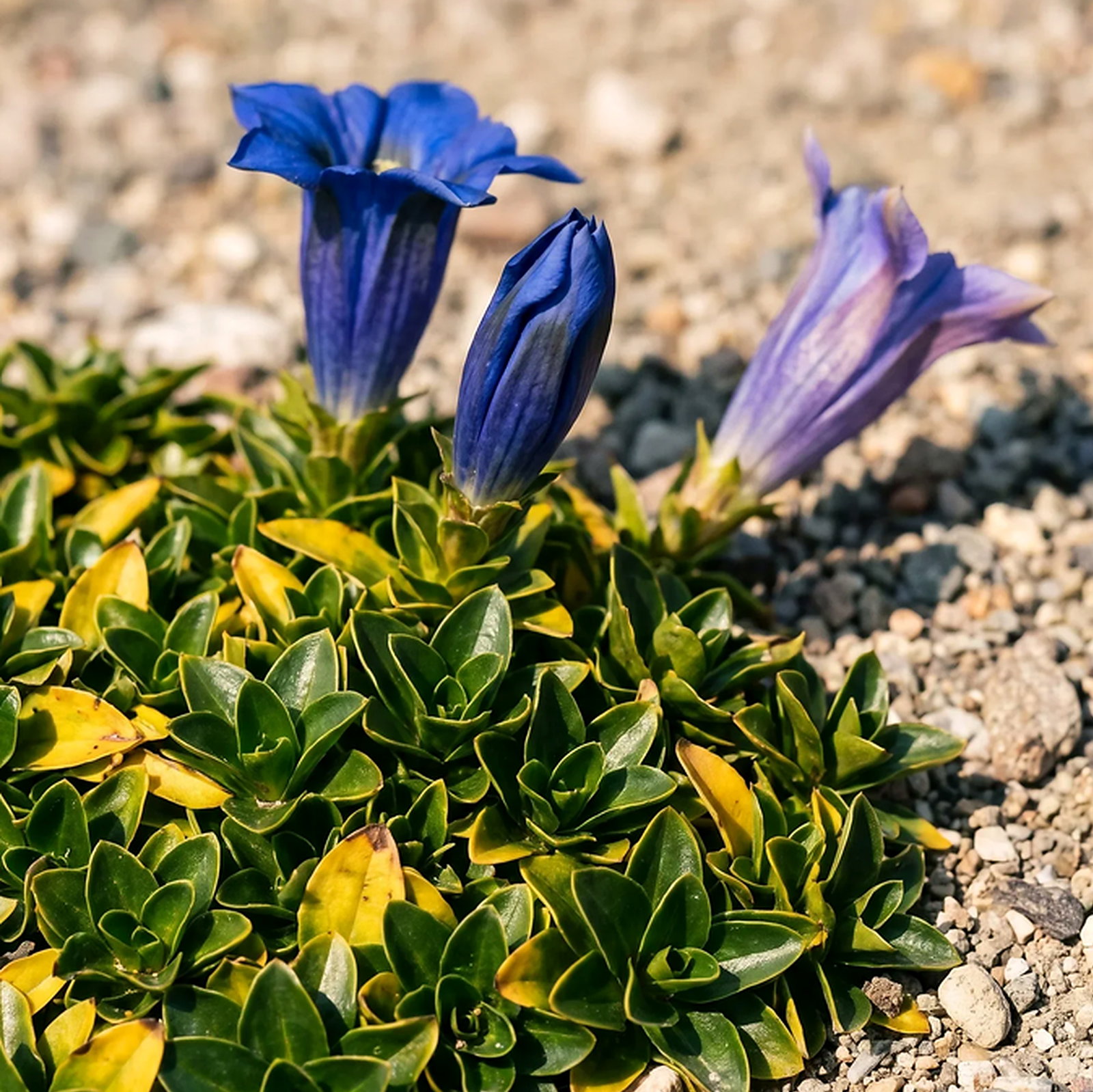
A plant only a few inches high might be expected to make a modest contribution. Gentiana acaulis has other ideas.
Its broad, upward-facing trumpets open above a low carpet of evergreen leaves. Our seed comes from a particularly deep-blue form, with pale throats that draw the eye into each flower.
This is a plant to enjoy close at hand: in an alpine trough, a raised bed or a carefully chosen pocket of well-drained soil. Its small scale gives every flower a sense of occasion.
Sowing now: Sow into a free-draining seed compost with a very light covering. Cold, moist conditions help break dormancy, making winter a useful time to begin. Keep the pots sheltered from persistent rain and maintain gentle, even moisture.
7. Clematis tangutica — golden lanterns and silken seedheads
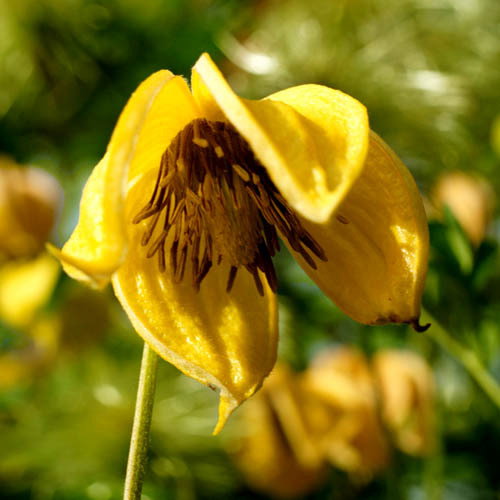
The flowers of Clematis tangutica hang like little golden lanterns, their thick petals opening to reveal the centre. As flowering gives way to seed, the plant changes character, dressing itself in large, silky heads that catch the autumn light.
It brings a cheerful looseness to a fence, trellis or generous support, offering interest well beyond its flowering season.
Raising a climber from seed is particularly satisfying. That small pot on the bench holds the beginnings of a plant that will eventually carry its flowers well above your head.
Sowing now: Sow into free-draining compost, cover lightly and start under cover at around 20°C. This species can germinate in warmth; if the seeds remain dormant, a period of chilling followed by a return to warmth can help. Give emerging seedlings plenty of light.
8. Astrantia major — a flower worth examining closely
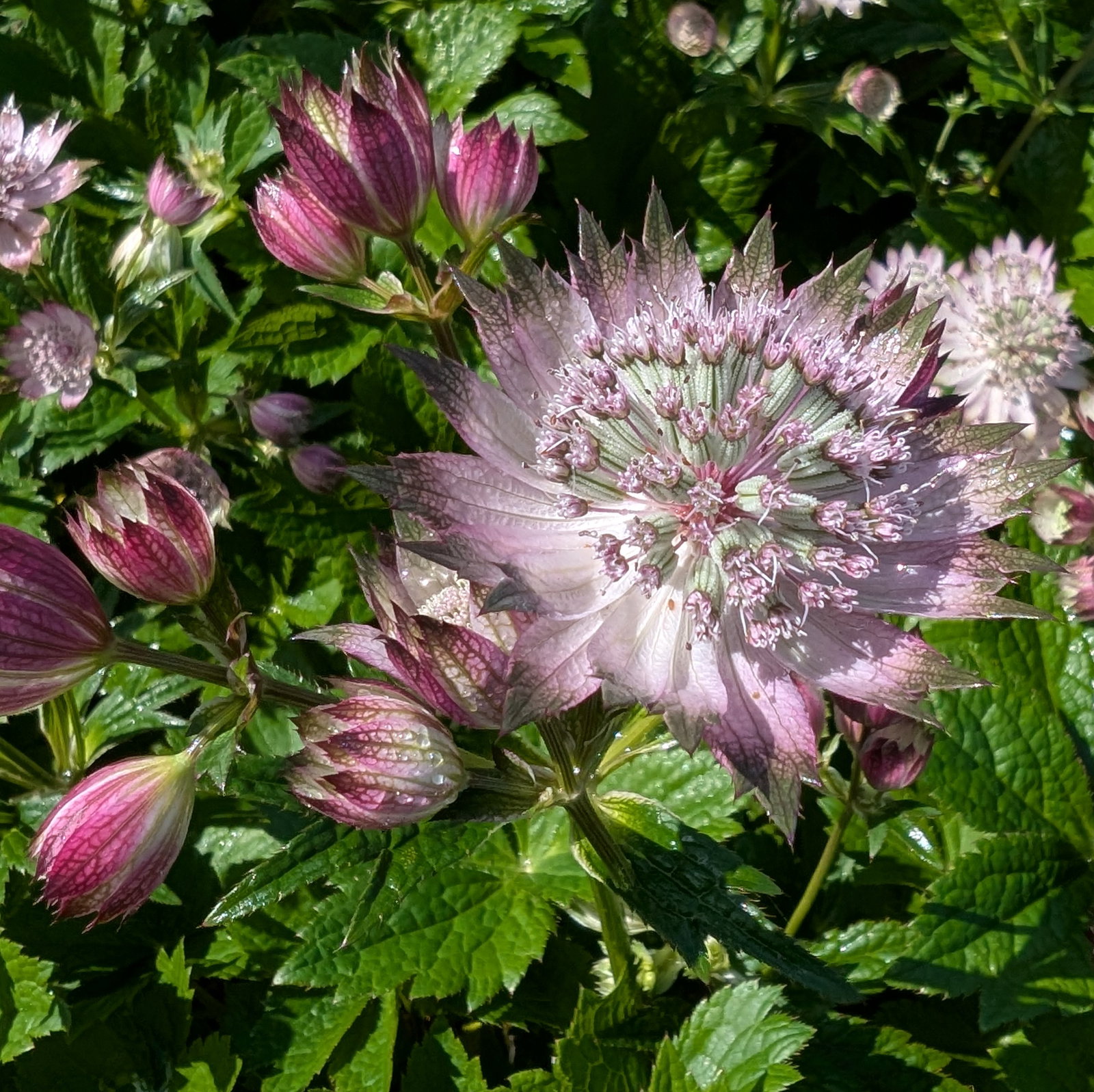
Lean towards an astrantia and a whole arrangement of tiny flowers comes into focus. The central pincushion is framed by radiating, papery bracts, forming a neat star in shades of green, pink and white.
Astrantia major brings this fine detail to a border over a long flowering season. It is especially at home in moisture-retentive soil and partial shade, where its airy stems mingle naturally with neighbouring plants. A few stems brought indoors make equally pleasing company in a vase.
Sowing now: Sow thinly on the surface of moist seed compost and place in a sheltered cold frame. A period of cold, moist conditions helps prepare the seeds for germination as temperatures rise. Keep the compost gently moist and check the pots regularly as spring approaches.
A few pots of possibility
Clean pots, suitable seed compost and clear labels are a good beginning. Read the packet before choosing a position: winter sowing includes both seeds that need chilling and those that welcome a warmer start.
Once seedlings emerge, light becomes especially valuable. Give them a bright position suited to the plant, with enough ventilation and careful watering to keep growth steady.
Perhaps the nicest part comes on an ordinary morning, when a pot that appeared unchanged yesterday has acquired its first small patch of green. By then, the garden you imagined beside the fire has already begun.
Author - Plant World Seeds